
How to Help Children Transition Between Activities: Practical Strategies for Home and School
Practical strategies to make activity changes more predictable, accessible, and respectful.
By Adaptive Strides Editorial Team · October 21, 2026 · Approximately 7-minute read
Why transitions can feel difficult
A child is building a favorite tower when it is almost time for lunch. They may want to finish, feel unsure about what happens next, or find the change in activity uncomfortable. Moving between activities can involve new expectations, sounds, people, places, and demands. Rather than assuming a child is refusing, first consider what information or support might be missing. Clear advance communication, practical visual tools, and meaningful choices can make some transitions more understandable while preserving the learner’s right to ask for help or more time.
What are transitions?
A transition is a change from one activity, setting, routine, or expectation to another. Examples include playtime to lunch, math to reading, home to school, or an afternoon outing to a bedtime routine. An unexpected change—such as a canceled playground visit—also requires adjustment. Transitions can involve language comprehension, time awareness, emotional regulation, sensory needs, mobility, and communication. Different learners experience these demands differently, and even the same learner may need different supports depending on the day.
Identify what makes the change difficult
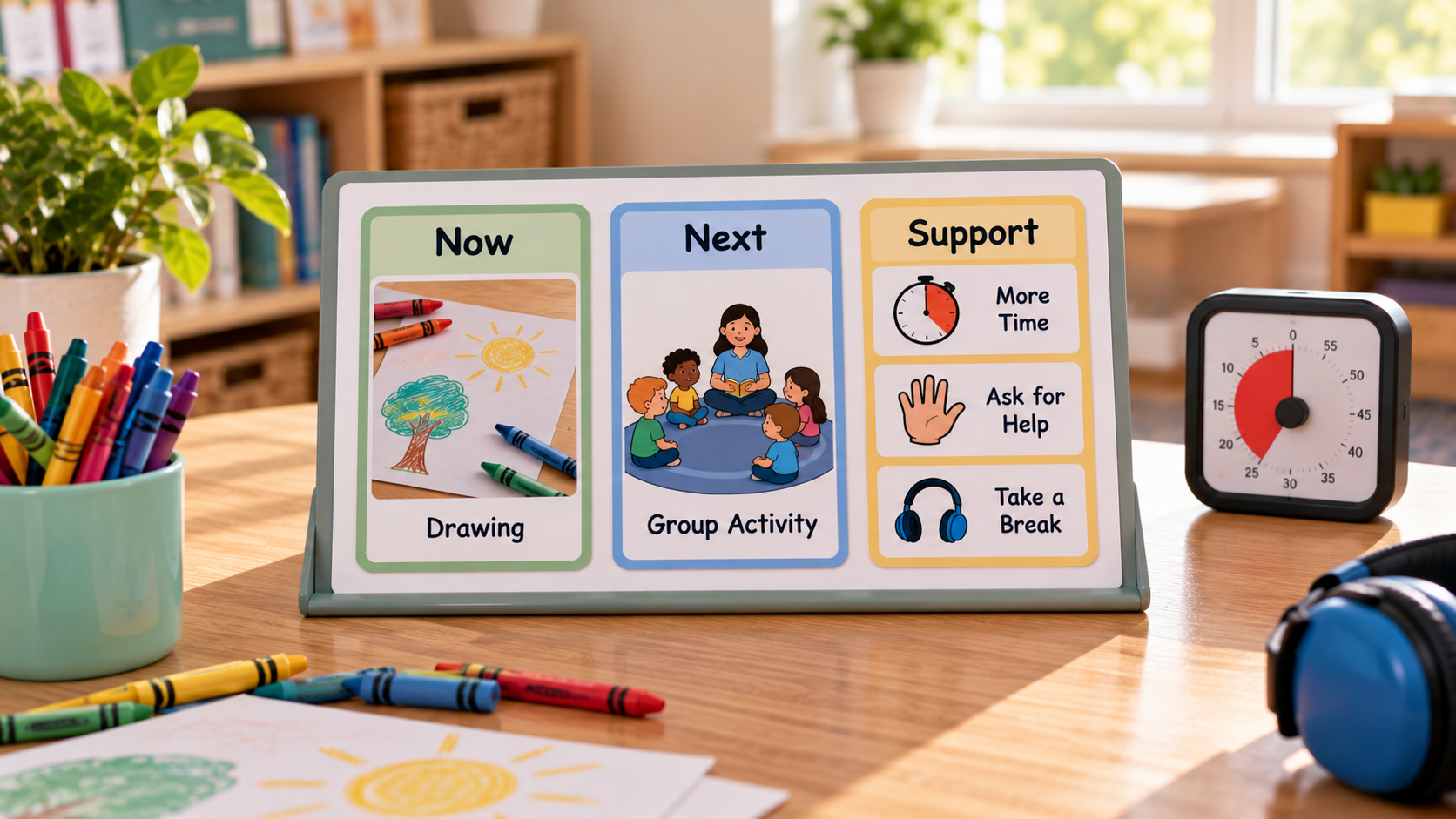
Before choosing a strategy, look at the specific situation. Does the child know what comes next? Is the current activity particularly meaningful? Is the destination noisy, physically inaccessible, or unfamiliar? Could fatigue, hunger, uncertainty, or limited communication access be contributing? For example, a child who hesitates to leave drawing may transition more comfortably after seeing that group time is next and learning they can bring their picture. The goal is to remove barriers, not to label understandable difficulty as defiance.
Five practical transition strategies
1. Give clear advance information
Let the learner know which activity is ending and what is coming. Use familiar spoken words, pictures, written instructions, or AAC as appropriate. For some children, a brief warning is enough; others benefit from checking a schedule earlier in the day.
2. Show the sequence visually
A visual schedule or First–Then board can keep the next activity visible. Point to the schedule together, and update it when plans change. Teach the learner how to use the support rather than expecting them to understand it automatically.
3. Offer time cues when helpful
A visual timer, clock, song, or agreed-upon finishing point may clarify when an activity changes. Timers are optional tools, not commands. Some learners find countdowns stressful; replace them with a less pressuring cue when needed.
4. Provide genuine choices
Offer choices you can honor: “Would you like to carry the book or the blocks to the shelf?” or “Would you like to walk together or independently?” When a transition can be delayed or adjusted, say so clearly.
5. Support transition communication
Teach and respond to messages such as “More time,” “Help,” “Break,” “What’s next?” and “Not ready.” Learners may communicate through speech, gestures, pictures, writing, or AAC. Requests should inform the plan, not be ignored because the schedule says to move.
→
🧼 Wash hands
Supporting unexpected changes
An unexpected change may be frustrating even when adults have a good reason. Acknowledge the original plan before explaining the difference. If rain cancels outdoor play, show the change, offer realistic alternatives, and invite the learner to communicate a preference or concern. Give time to adjust when possible. A Change of Plans card should make the situation clearer, not require the learner to feel pleased about it.
Teaching transitions at home and school
At home: playtime to dinner
A caregiver shows “Now: blocks; Next: wash hands, then dinner,” and gives a brief advance reminder. The child chooses where to save their construction and can request a few extra minutes if feasible. The adult responds to communication and helps with the change instead of using the timer as a threat.
At school: moving between lessons
An educator points to a classroom schedule before reading time ends and shows that science comes next. The student may choose to carry materials, use a transition object, or ask for clarification. Consistent routines can help, but plans should stay flexible when a learner needs additional processing time, a quieter route, or accessible mobility support.
Common mistakes and helpful adjustments
Avoid ending meaningful activities abruptly when preparation would help, overwhelming learners with repeated verbal instructions, or using countdowns as punishment. Do not assume every child benefits from the same board or timer. If a visual support is confusing, simplify it or try another format. If distress appears related to noise, crowds, fatigue, or physical access, address that barrier rather than increasing pressure. Keep needed communication systems available throughout the transition.
How to tell whether a strategy is helping
Look beyond how quickly a child moves. Can they identify what comes next? Do they use the visual independently or ask meaningful questions? What assistance is needed? Are they comfortable, distressed, or able to participate in the next activity? Invite learner feedback whenever possible. A successful transition may involve extra time, a break, or an accommodation; progress should reflect communication, comfort, and meaningful participation.
Related Adaptive Strides resources
Frequently asked questions
Why are transitions difficult for some children?
Transitions may involve uncertainty, changes in preferred activities, sensory demands, communication barriers, or accessibility needs.
How can visual schedules help?
They show the activity sequence in a format the learner can revisit, reducing reliance on spoken reminders.
What if a visual timer increases anxiety?
Stop using it or change the approach. Try an agreed-upon finishing point, a schedule, or gentle advance information.
How can I help with unexpected changes?
Acknowledge the change, explain what is different, offer genuine alternatives, and allow time for questions or adjustment.
What if a child asks for more time?
Respond respectfully. When possible, agree on a realistic extension; otherwise explain the constraint and offer another form of support.
Conclusion
Helpful transitions begin with understanding the learner’s needs. Advance information, visual schedules, appropriate time cues, meaningful choices, and accessible communication can make everyday changes easier to navigate. No single strategy works for everyone, and moving immediately is not the only sign of success. The aim is predictability, comfort, autonomy, and participation—with supports that fit the individual. Explore the Adaptive Strides Learning Hub for more practical visual-support ideas.
References
- Sam, A. (2016). Visual Support (VS): Evidence-Based Practice Brief Packet. National Professional Development Center on Autism Spectrum Disorders / AFIRM.
- Steinbrenner, J. R., et al. (2020). Evidence-Based Practices for Children, Youth, and Young Adults with Autism: Third Generation Review. Journal of Autism and Developmental Disorders.
- Laurence, S., & Vivian, J. (2026). Visual Supports in Practice. Grand Valley State University START Project.